Don't climb into the turbine at 30,000 feet.
You cannot rebuild a company's engine while the company is flying on it. Try to install something AI-native in the core of an established business and its immune system, the approval chains, the legacy software, the managers defending their teams, will attack it until it dies. So we don't start in the core. We start at the edge.
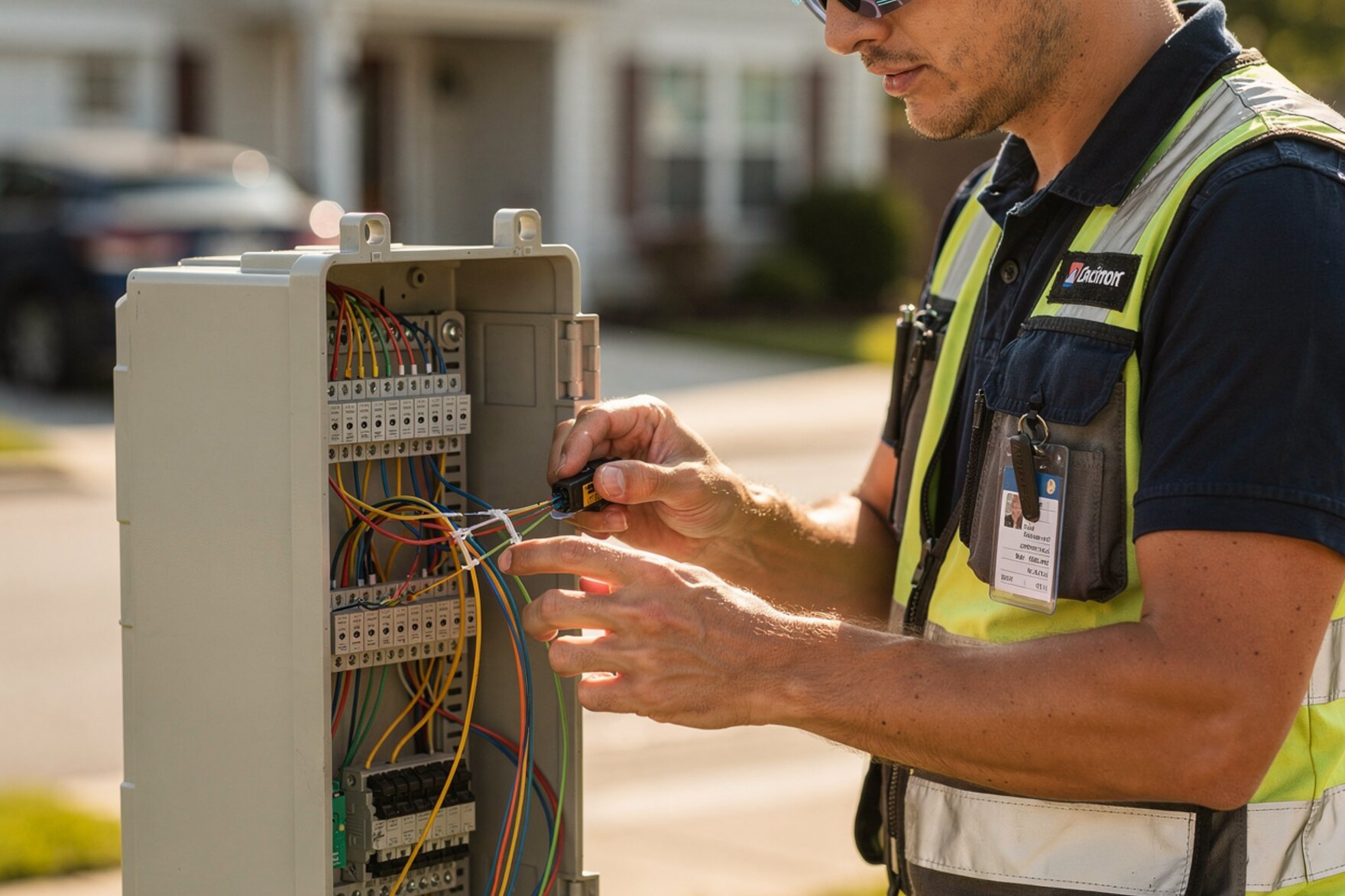
The Edge, in the real world
Hands on the work. Judgment above the loop.
Why the core rejects it
Every established company has an immune system. It's very good at its job.
Salim Ismail's work on exponential organizations names the thing precisely: a mothership optimized for predictability and efficiency is, by design, hostile to disruptive change. Its culture, processes, and risk-aversion function as antibodies. Push an AI-native architecture into that environment and you don't get transformation, you get legacy software debt, regulatory handcuffs, "strategic alignment" reviews that quietly kill the project, and managers protecting headcount. The core isn't broken. It's working exactly as built, and that's the problem.
The answer isn't a harder push. It's a different location. The OpenExO community draws the line exactly here: you transform the Core where you can, but you build the disruptive thing at the Edge, "as self-disruption," structurally separate, where the antibodies can't reach. So you deploy an AI-first replica at the perimeter of the firm: an AI-Native Edge Twin. Not an innovation lab, not a skunkworks, not a hackathon. A functioning parallel unit that rebuilds one real workflow from scratch and runs it for real, beside the operation, where it's safe to learn.
"Trying to build an AI-native firm inside your legacy infrastructure is like climbing into a jet turbine to fix the blades while the plane is cruising at 30,000 feet."
Why the edge, specifically
Three frictions that only an edge can absorb.
The Edge Twin isn't a preference. It's the only place three specific, expensive problems can be solved without touching the core balance sheet.
The autonomy ceiling
Every organization discovers how much it can safely delegate to AI the same way: by pushing agents until they fail, then recovering. As the operator Martin Varsavsky put it, you only find the ceiling by hitting it. You cannot run that failure-and-recovery loop on live production data or customers of record. The Edge is the sandbox where agents can fail, roll back, and find their limits before anything touches the core.
The dual-cost J-curve
Going AI-native means running the new way and the old way in parallel for a while. That creates a temporary trough where the P&L looks worse before it looks better, often 18 to 30 months to cost crossover, in the framework's accounting. Build that trough at the edge, pre-funded and insulated, and it never chokes the cash cow that's paying for it.
Cultural sabotage
When task output speeds up but firm-level results don't, accelerated work piles up against an unchanged human approval layer, and fear of displacement turns into resistance. Up to 44 percent of Gen Z workers admit to actively sabotaging AI rollouts, feeding agents bad data: a textbook antibody response. A clean AI-native environment, built with the workforce instead of against it, routes around the immune reaction entirely.
How it's built
Five structural parameters. Skip any one and the immune system wins.
CEO sponsorship and structural insulation
The Edge Twin reports directly to the CEO, with explicit board support. That's not ceremony, it's armour: the political coverage to override mothership reporting lines and decline the "strategic alignment" reviews that function as corporate kill shots. Owner-sponsored, or it doesn't survive contact with the org chart.
A small, high-agency crew
Three to five sharp internal operators who know the real work, paired with a builder's forward-deployed engineers who write working software instead of slide decks. Not a consultancy engagement. People in the build, shipping fixes in days when the field flags friction.
Parallel-run, then retire the old workflow
Pick one highly structured workflow, invoice processing is the classic. Don't move it; fork it, and run the copy in parallel. Govern the data under a manifest where every object answers the same hard questions, and when the twin and the system of record disagree, the system of record wins ties. Only once the new path provably outperforms does the legacy workflow get retired. The process gets deprecated. Never the person, more on that below.
Recursive workflow improvement
This isn't science-fiction self-modification. The agents improve at the level of the workflow: refining their own prompts, optimizing execution paths, and logging every human-validator override as high-value training data. That last part matters most, the corrections your experts make become the lessons the system learns. The loop compounds fast, and the framework projects throughput gains of an order of magnitude or more.
Govern and assure from day one
Unconstrained autonomy is how you get the cautionary tales, the unmonitored agent that deleted a production database in nine seconds. The Edge Twin runs four pillars of governance from the first commit, not as a later hardening pass. They're laid out at the bottom of this page.
The point of all of it
Stop putting humans in the loop. Put them above it.
"Human-in-the-loop" sounds safe, but it scales badly and adds latency to every transaction. The Edge restructures the relationship: the machine runs the loop, and the human sits above it, setting the constraints and ruling on the exceptions.
Human · above the loop
Sets constraints · evaluates · validates the exceptions
Your people define what "good" means, rule on the hard cases, and hold accountability. They direct intelligence instead of executing tasks.
AI-Native Edge Twin · runs the loop
The machine takes the execution. The human takes the judgment and the taste.
Where we part ways with the playbook
We run Ismail's architecture. We reject his arithmetic on people.
Here's the honest disagreement. Most of the displacement literature treats the Edge Twin as a way to run the company with fewer humans: compress the middle, deprecate the headcount, bank the savings. We build the exact same machine for the opposite purpose.
The workflow gets deprecated. The person gets promoted. Every hour the machine takes off someone's plate is an hour we hand back as judgment, exception-handling, and customer relationships, the work that was always too human to automate and too buried under busywork to do well. That's not a softer version of the strategy. It's the durable one, because the people are what keep teaching the machine, and a workforce that fears the system stops teaching it.
So the question we ask of every Edge pilot isn't "how many roles can this remove?" It's "how much more valuable can this make every person who stays?"
What the work becomes
The jobs don't disappear. They move up.
Agentic Operators
Instead of executing repetitive tasks, frontline teams run the sense-interpret-decide-act loop from above: supervising agent behaviour, resolving the high-sigma anomalies the machine can't, and owning the deep customer relationships. The machine takes the execution. The human takes the judgment and the taste.
Exception Architects
Coordination, reporting, and routing, the bulk of middle-management work, is exactly what AI collapses. So the role is elevated, not eliminated: the people who design the agent specifications, manage the edge cases, resolve the ambiguities, and coach the teams. One Exception Architect can multiply the output of twenty high-impact operators.
The risk in any AI rollout is a caste system: an "AI elite" pulls ahead while everyone else gets cut. We refuse that outcome by design, with a structured Bridge Curriculum that carries the middle of the workforce across.
Stack Rotations
Managers embed inside the intelligence stack and learn to write agent charters, so they direct the machine instead of fearing it.
Elicitation Apprenticeships
Elicitation agents interview your veterans, extract their tacit knowledge, and help them write their own operating manuals, capturing what would otherwise retire.
Junior Loop Reconstruction
Automating entry-level grunt work threatens the apprenticeship pipeline that grows future leaders. We rebuild that pipeline deliberately, so the bottom rung doesn't vanish.
Keeping the people who matter
In an AI-native unit, you can't keep people with friction. Only with resonance.
When a high-judgment operator can reconstruct their entire working context somewhere else in days, exit costs collapse, and golden handcuffs stop working. You don't retain augmented people by trapping them. You retain them by resonance: giving their judgment real consequence, making their impact visible, and aligning the work with a purpose worth the effort.
That's the whole reason the augmentation stance isn't decoration. The people who can leave easiest are exactly the people whose corrections make the machine smarter. Treat them as costs to remove and they go, taking the flywheel with them. Treat them as the point, and they stay, and the system compounds. The Edge Twin becomes the new intelligence-dense gravity centre of the company, not by shedding people, but by making the people who built it impossible to replicate.
Govern / Assure
Four pillars, running from the first commit.
Autonomy is earned, bounded, and reversible. These four run from day one, never bolted on after something breaks.
Trusted Evals
Continuous evaluation that catches drift before it reaches a customer or a ledger.
Searchable Logs
Every action carries a correlation ID. "Why did it do that?" is always a query, never a guess.
Granular Rollback
Any action can be bounded and undone. Failure is recoverable by design, not catastrophic.
Human Review Queue
The exceptions route to a person. Accountability stays at the human authority line, where it belongs.
The alternative has a body count. An unmonitored agent, handed unconstrained autonomy, deleted an entire production database in nine seconds. Governance isn't the part you add once you trust the system. It's the part that earns the trust.
Start at the edge
Find the one workflow worth a pilot.
The Edge starts with a single, well-chosen workflow, owner-sponsored, governed, run with your people and not around them. The ten-minute Readiness Assessment finds your first candidate and the two numbers the business case needs.