Superhuman work.
Human in command.
For manufacturers, brands and service networks. An expert coworker beside every dealer, technician and rep you depend on: it knows your products cold, shows its sources, and never makes the call. Your people stay in command. Head office finally hears what the network is asking.
The ten-minute Readiness Assessment · scored on the spot
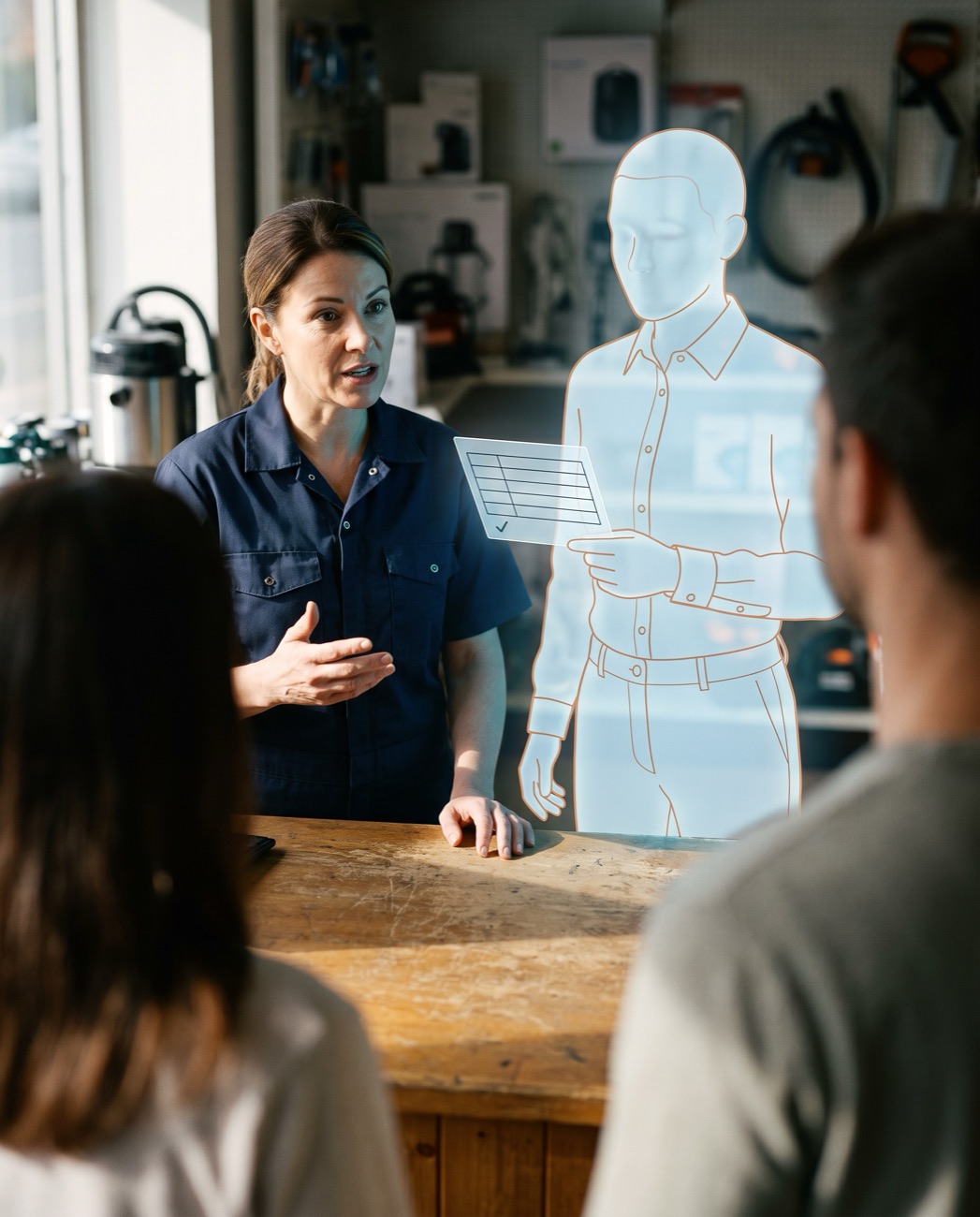
A dealer asks. The coworker answers, shows where the answer came from, and leaves the decision with her.
What we actually sell
A coworker you can hand a phone.
It is not a robot or a kiosk. It is an expert on the phone, tablet, smart glasses or earpiece your people already carry. They ask, out loud or by typing, where the work happens. It answers in seconds, shows its sources, and hands the decision back to the person.
The wrong target
The industry pointed it at the worker, not the work.
Faced with the most powerful work-amplifier ever built, the loudest companies in tech made a choice. Instead of putting an expert in every worker's ear, they aimed it at the headcount line. That is not augmentation. It is a layoff with a chatbot attached.
Replace the human
Treat labour as a cost to delete. Automate the person, not the toil. The result is predictable, and it's already on record: workforces that fight the rollout, quality that craters, and the institutional knowledge you were trying to capture walking straight out the door.
Augment the human
Treat the worker as the asset and the toil as the target. Give a second-year the judgment of a twenty-year veteran. Capture what the veterans know before they retire. Every person performs like your best person, and the value of their work compounds instead of collapsing.
This is not a values position dressed up as strategy. It is the strategy. A learning system is only as good as the people feeding it real corrections from the real world, and a workforce that fears the system starves it.
For decades that was an argument. In August 2026 it became a measurement. Stanford's Digital Economy Lab went through American payroll records covering millions of workers and found the line running through the middle of the labour market: where AI is deployed to substitute for human tasks, employment falls. Where it is deployed to complement workers, employment is flat or rising. Same technology. Same two years. Same economy. The variable isn't the model you licensed — it's what you pointed it at.
Augmentation isn't the soft choice. It's the only architecture where the machine keeps getting smarter, because the humans never stop teaching it.
Read Paper 7: The Argument That Lost Its Name →Free, no form. Twenty minutes.
The gap opening in every industry
The experts are leaving. The equipment is getting harder.
Two things are happening at once. The people who carry decades of know-how are retiring faster than they can be replaced, and the products they understood are being rebuilt around new technology every few years. The distance between what a new worker knows and what the job now demands grows from both ends.
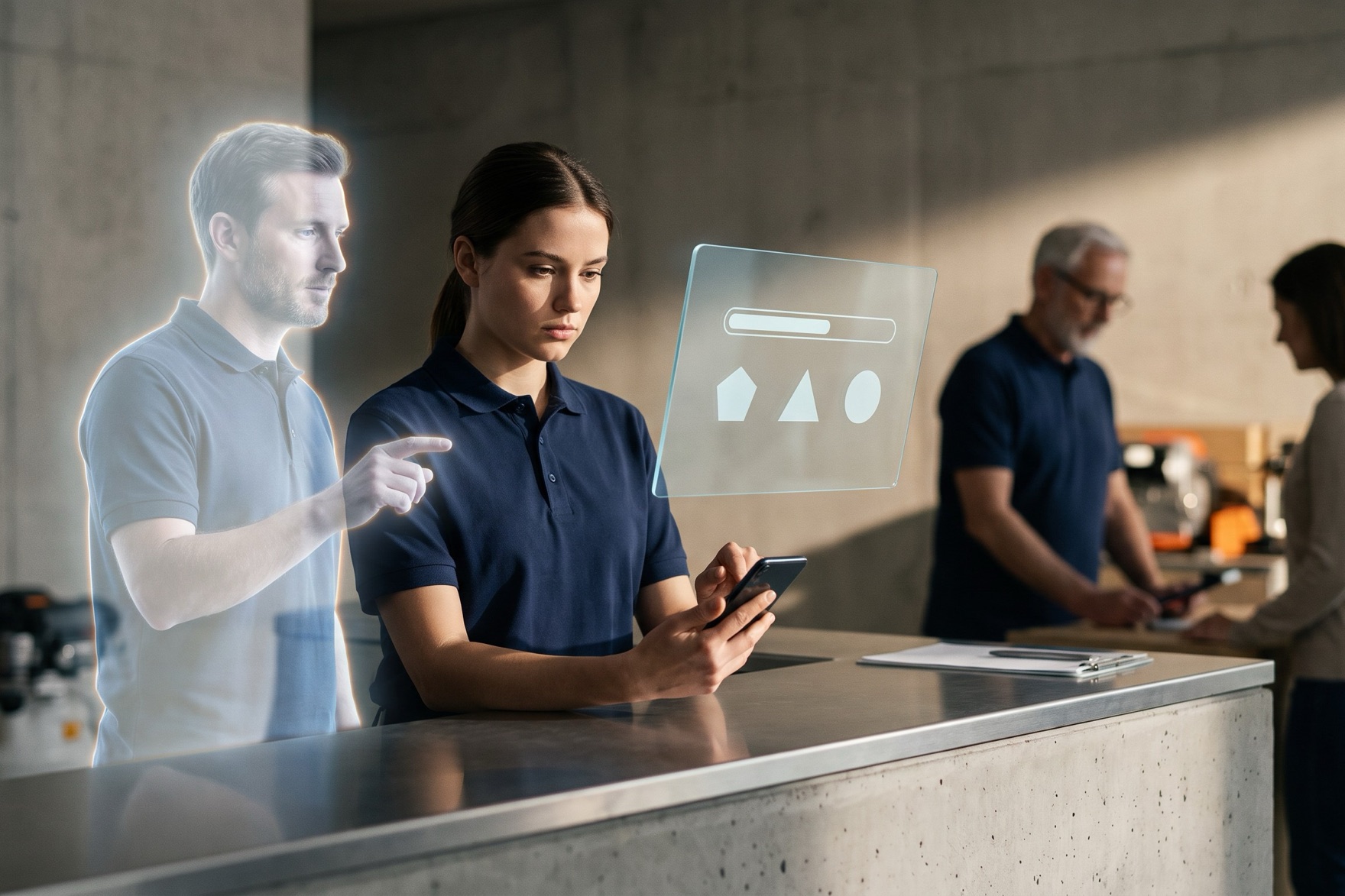
Meet new workers where they are
An onboarding coach on the phone they already carry. The products, the process and the language of the job, in the order a new hire needs them, at the pace of the person learning.
The classroom goes into the field
What was taught in a room is there again at the moment of the job. They can ask, be walked through it step by step, and be checked on what they understood, with the customer's equipment in front of them.
Learning you can see
The learner sees their own progress. The manager sees where a group of new hires is struggling, so the next session covers that. It guides the training. It does not rank the trainees.
Today: sizing a system for a customer
Three short steps, then one from the floor.
3 OF 5 · THIS WEEK
A two-storey home sits just over the limit for the smaller model. What do you look at first?
Most-missed this week: explaining the efficiency rating. Added to Thursday's session.
An illustration of an onboarding coach and the group view a manager sees.
The economics · why now
The giants stopped out-buying the independent. Now they out-compound them.
Knowledge is a strange asset. A truck wears out; a storefront needs a roof. But a hard-won piece of know-how can be used ten thousand times and be just as sharp the ten-thousandth time. Economists call it limited exhaustibility, and in 2023 a team led by Cristiano Antonelli measured what it does to competition across four decades of US company data, 1977 to 2016: the bigger the firm, the more of its capital is knowledge — and the more each unit of that knowledge pays. The output elasticity of knowledge capital in large firms rose by roughly 120 percent over the period, while the payoff from physical capital declined.
The counter isn't out-spending the giants. It's owning the same engine. Capture the expertise, compound it, put it back to work on every job — at the scale of a twelve-person shop. That flywheel is what we build, and the economics of it are written up in full.
Request Paper 6: The Knowledge Flywheel →The model, in three roles
Tony had JARVIS. And Tony had Pepper.
Augmented human intelligence isn't two parts, it's three. The operator who decides. The coworker who amplifies. And the supervisor who governs. Take any one away and it stops working.
Keeps the judgment, the taste, the customer relationship, and the final call. They stop executing rote tasks and start directing intelligence: setting the intent, catching the anomaly, owning the outcome.
Knows the whole business, remembers everything, drafts the work, and moves at machine speed. It surfaces the answer with its sources attached, and when it doesn't know, it says so and hands the call back up.
Sets the constraints, validates the exceptions, holds the accountability. Not a bottleneck in every transaction, but the human authority the whole system answers to. Where the buck stops.
JARVIS, Tony Stark, and Pepper Potts are characters from the Iron Man films, used here only as shorthand for an idea everyone already pictures. Capaciti AHI is not affiliated with or endorsed by Marvel or Disney.
On shift, in the real world
JARVIS, where the work actually happens.
Not a demo on a laptop. A coworker in the field, at the counter, in the truck, and on the road, on whatever device the work allows. Phone, tablet, smart glasses, or a voice in the ear.
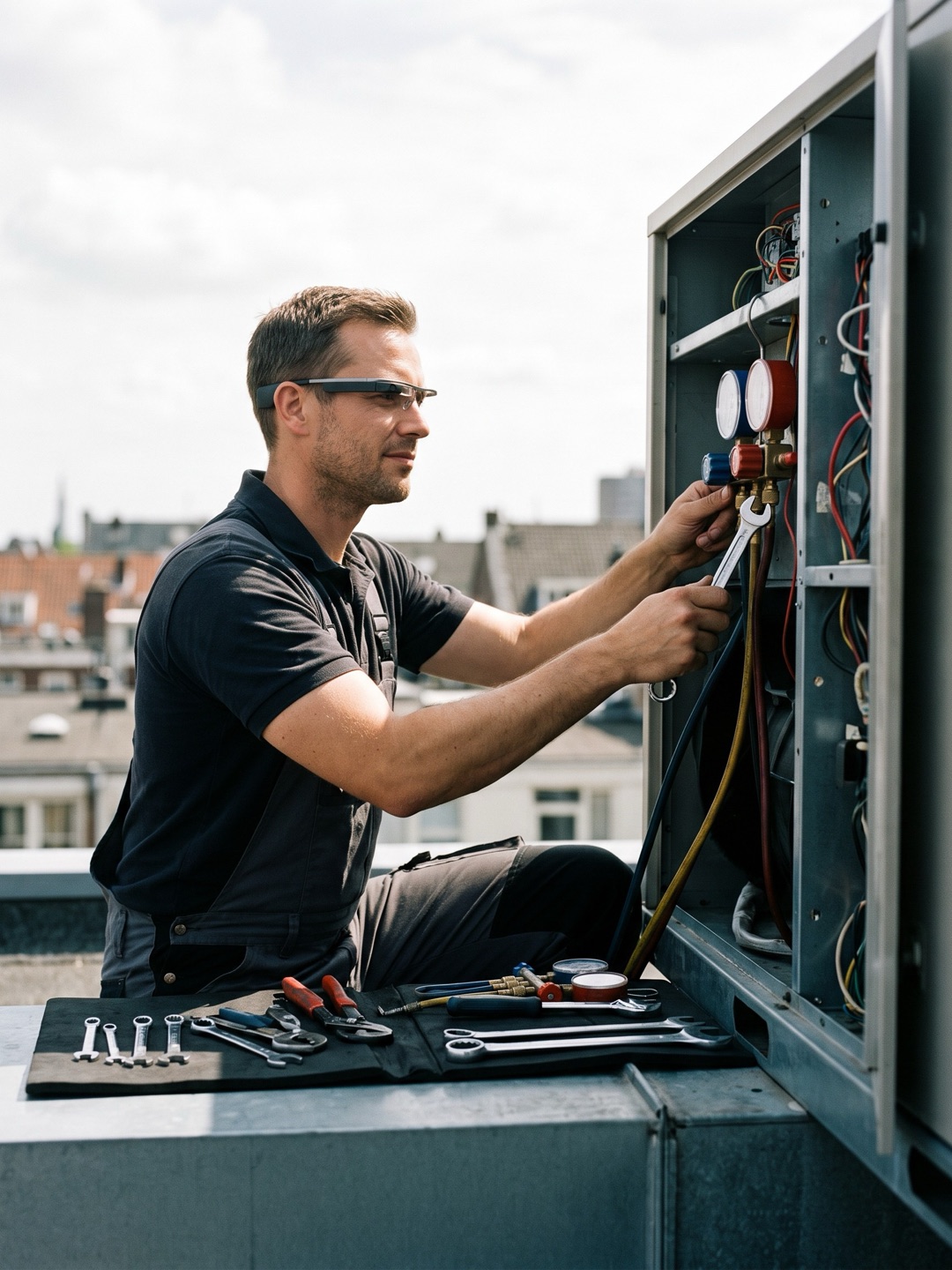 Smart glasses
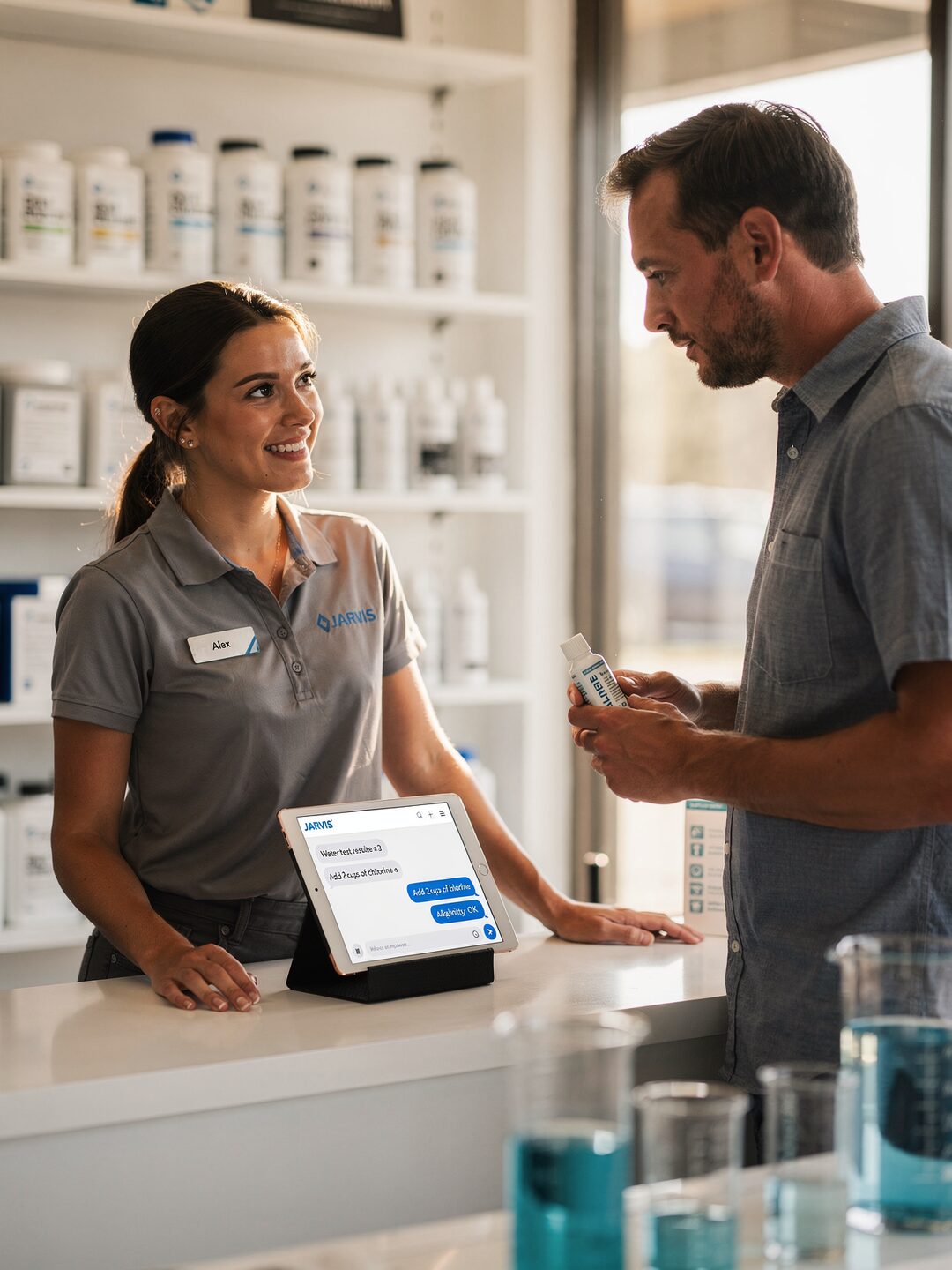 Tablet
 Smartphone
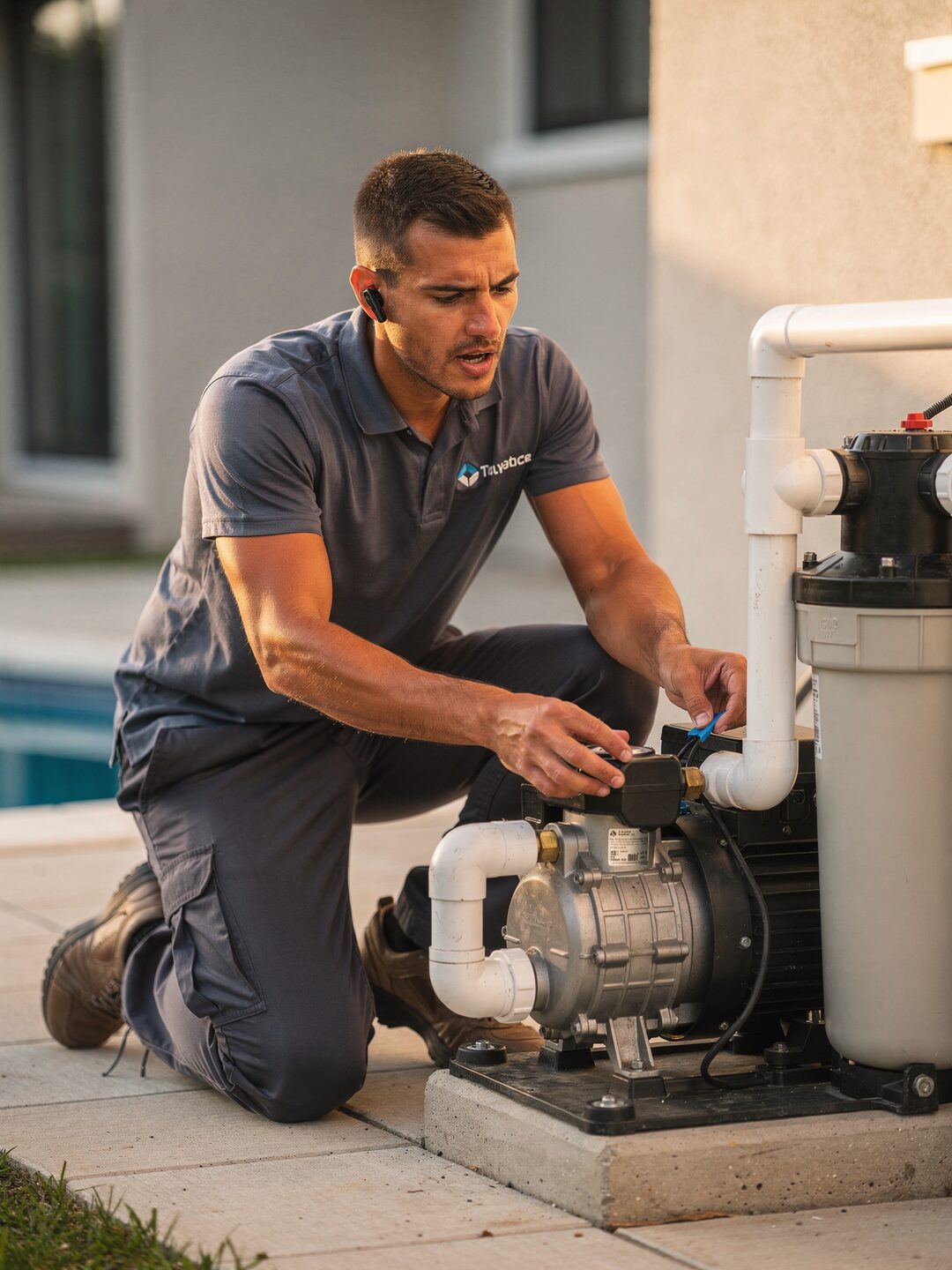 Voice in the ear
What you're actually buying
A JARVIS Model Coworker, built for your business and the role you need filled.
Not software seats. Not a generic chatbot. We build you a coworker on the JARVIS model: trained on your products, your procedures, and your best people's judgment, then put to work in one role on your team. One vertical, one job, one accountable coworker at a time, delivered as a service and answerable to a human who stays in command.
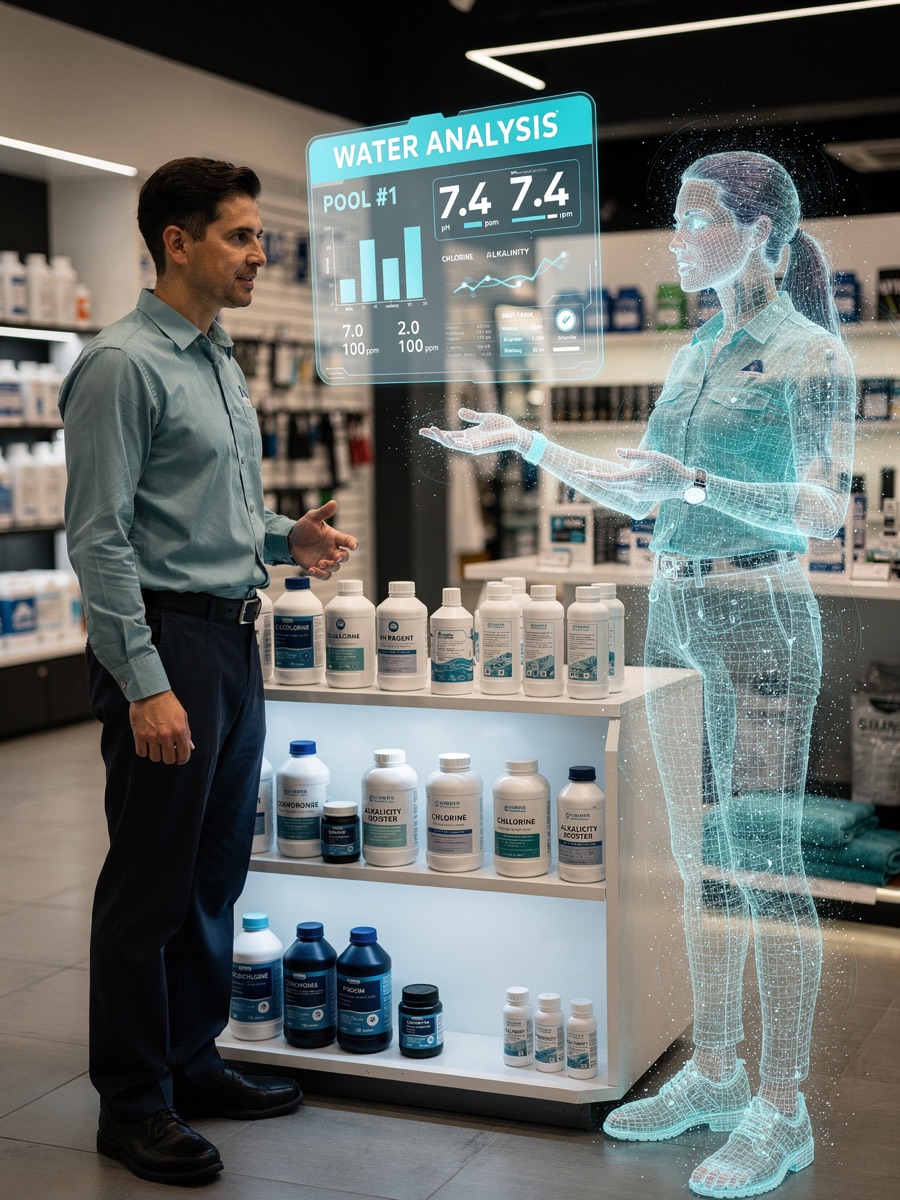
The Counter Coworker
Every product and parts answer in the store's own voice, the science attached.
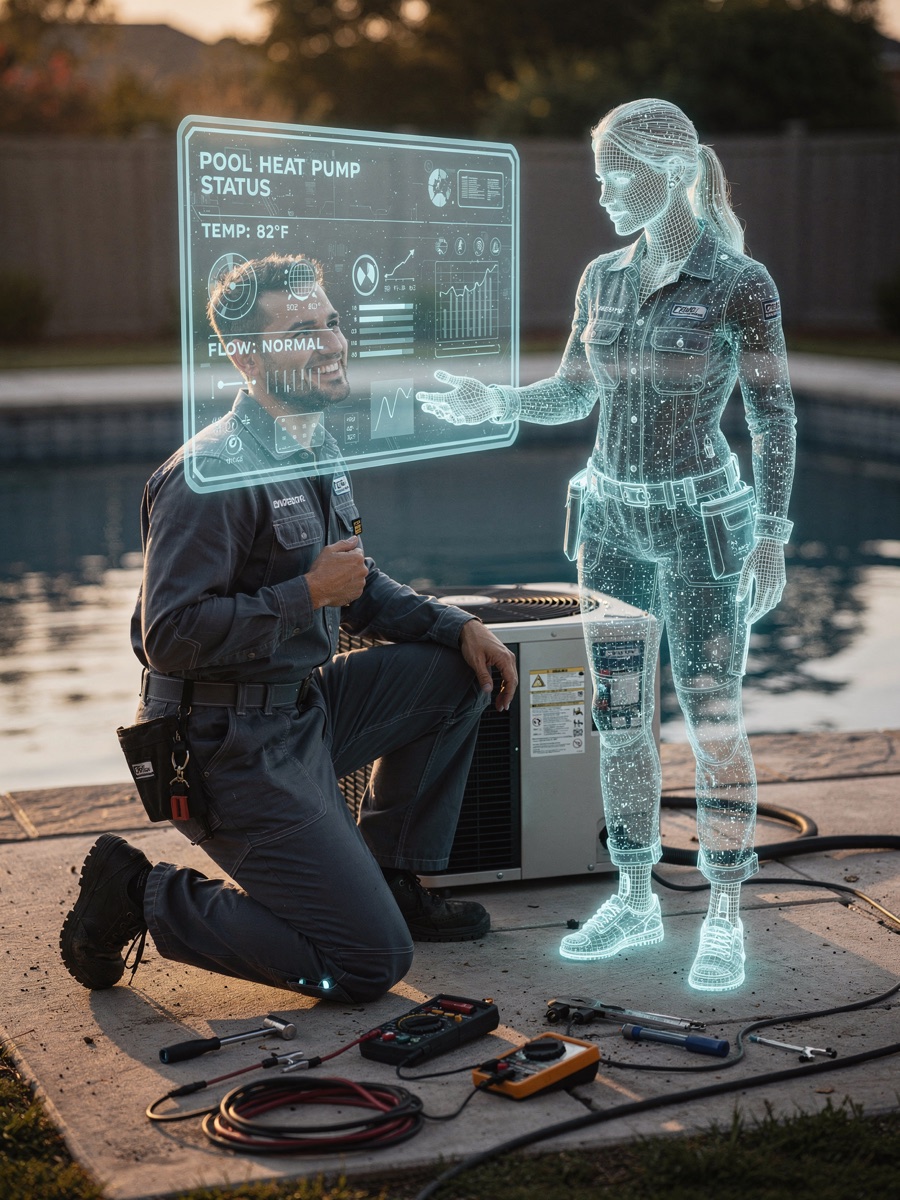
The Field Coworker
A master tech's diagnosis in the ear, hands-free, so the fix lands on the first visit.
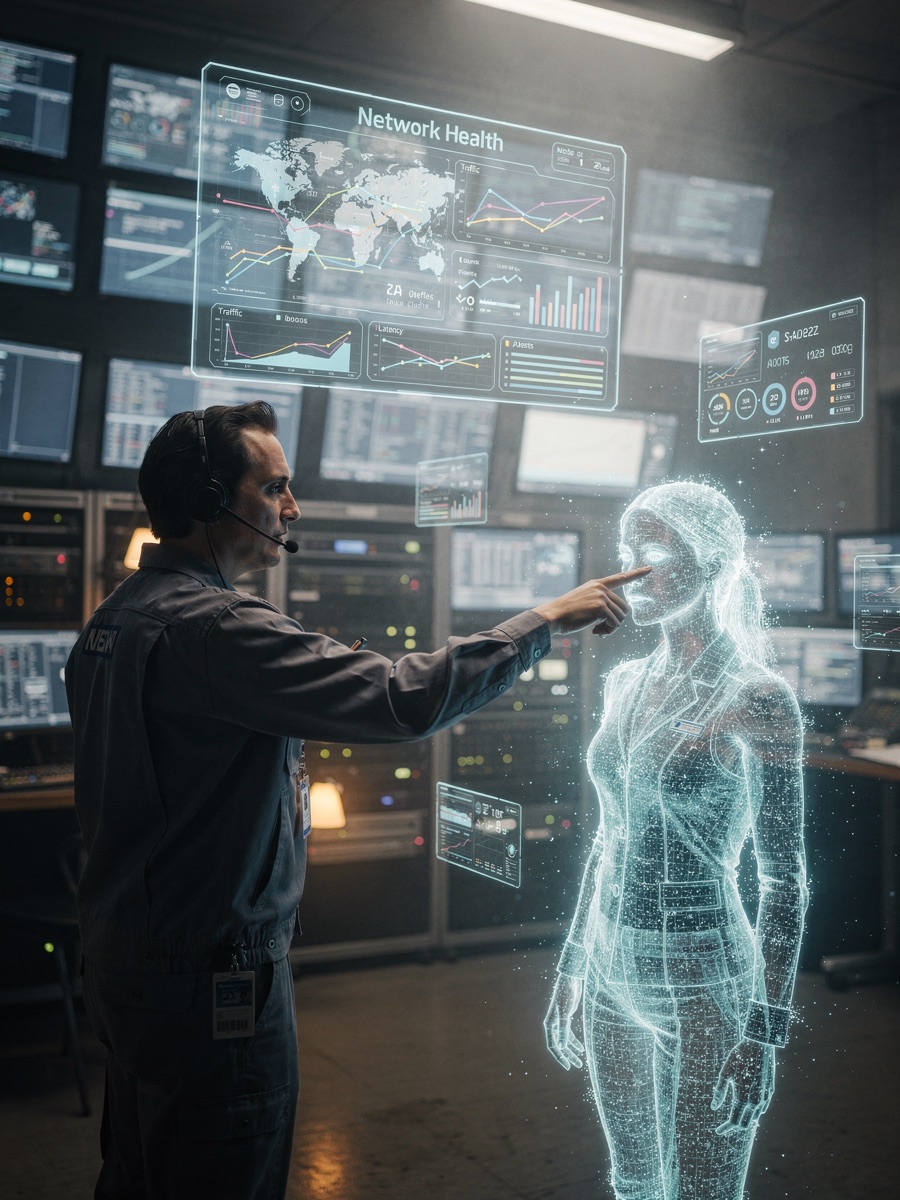
The Supervisor
Network health, never a leaderboard of people. Questions in aggregate, so you know where to steer.
Where this came from
Born in a dealer network. Built for the way one really works.
Capaciti AHI was not designed in a lab and then pointed at an industry. It grew out of decades inside dealer networks, building them and running them, and it carries what that teaches you.
A dealer network is a particular kind of organization. Hundreds of independent owners, each running their own business. A manufacturer who can advise but cannot command. Staff who turn over every year. A product line that keeps getting more technical. And a gap between the best dealer and the average one that no campaign has ever closed.
So we built for the whole dealership, seat by seat, and for the network above it. That is the hard version of the problem. Once it works across independent businesses that answer to nobody, it works inside a sales force, a service fleet or a single company. The same engine, in other industries ↓
Runs the business on what is true
Where the store is strong, where it is thin, and what the best stores in the network do differently.
Coaches the floor without leaving it
Every associate answering like the best one, and a clear picture of what the team keeps getting asked.
Turns fixes into procedures
Approves what the technicians discover, so a good repair is found once and used by everyone.
Sells with the science behind them
The right answer to the objection, in the store's own voice, with the source attached.
A master tech in the ear
Hands on the equipment, the diagnosis and the steps spoken as they work, first visit.
Stays with their local dealer
Help at home between visits, always pointing back to the dealer who looks after them.
For the people who grow the network
A dealer-development coworker. Not a CRM with a chatbot attached.
A general-purpose CRM was built to track deals. Dealer development is a different job: growing the same independent businesses year after year, one relationship at a time. So we built the coworker a dealer development manager would design for themselves.
It knows every dealer in the book: what they sold, what was promised, what was discussed last time and what is coming due. It prepares the manager before the visit, takes the debrief by voice afterwards, and keeps the plan honest between the two. The goal is each dealership's own organic growth: more dealers growing, not more calls logged.
And it closes a loop most networks never close. What dealers struggle with, across hundreds of conversations, can show the manufacturer which course to write, which tool to build and which program is not landing. Training and tools stop being a guess.
Today
Who to call, who to see, and what is due, in the order that matters.
The dealer file
Every conversation, every visit and every commitment for a dealer, in one place.
Sales, straight from your books
Each dealer's purchase trend, taken from your own sales records and never estimated.
Growth plans
A plan built with each dealer, agreed, tracked and revisited through the year.
Visit prep and debrief
What to raise before the visit. A spoken debrief afterwards becomes the record.
Opportunity calculators
The size of the prize for a dealer, worked out with them at the table.
Lapsed-customer recovery
Helps a dealer find and win back the customers who stopped buying, from the dealer's own records.
The exchange
One manager's winning play, approved, becomes the whole team's playbook.
A selection. The core is in daily use today. It holds the manager's own account notes, never what a dealer's people ask their coworker.
For a sales force
Every rep walks in like your best rep.
A specialist sales force has the same problem as a dealer network, with a tie on. Complex products, a customer who knows the subject, a short meeting, and a wide gap between the top of the team and the middle. The coworker works on that gap.
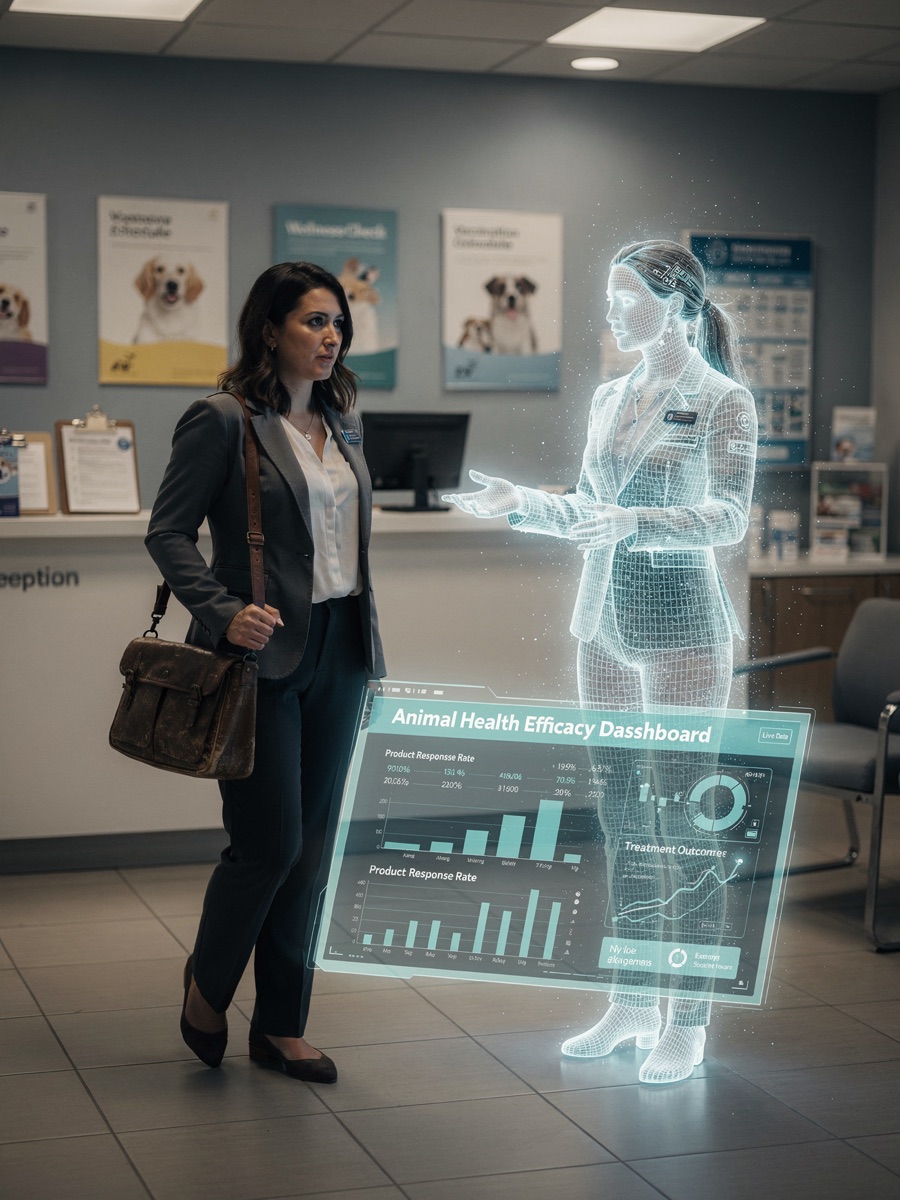
Sales force effectiveness
The product knowledge, the account's history and the next best question, ready before the door. The answer to the hard objection, with the source behind it, in the words your best people use.
Training that continues after the classroom
What was taught at the launch meeting is there again in the car park before the call. Reps can ask, and work an explanation through until it is theirs, for as long as they sell the product.
New reps productive sooner
An onboarding coach for the first months in the territory: the products, the customers, the process and the language of the job, at the pace of the person learning.
Development a manager can steer
Sales leaders see what the team as a whole is asking and where it is unsure, so coaching time goes where it is needed. Patterns, not a ranking of people.
Inside the boundary you set: what may be claimed, and what must be referred to a person.
Where it applies
One engine. Any industry where expertise is the bottleneck.
The pattern is the same wherever a technical product reaches its customer through people: a sales force, a dealer network, a service fleet. Complex knowledge, a moment that matters, and not enough experts to go around.
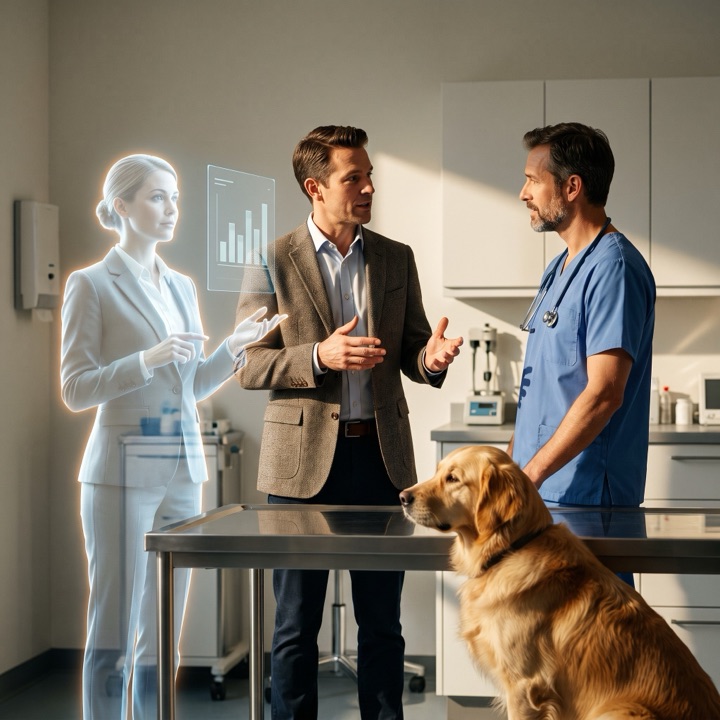
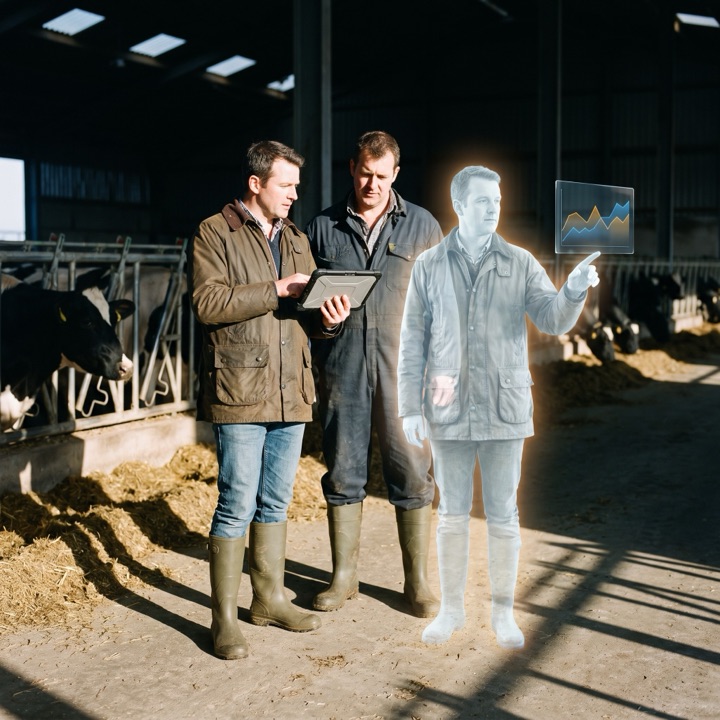

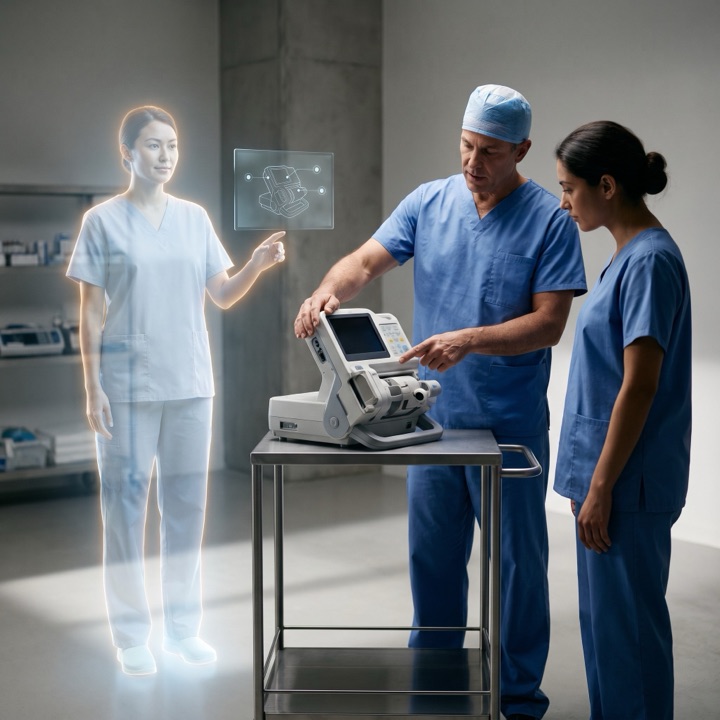
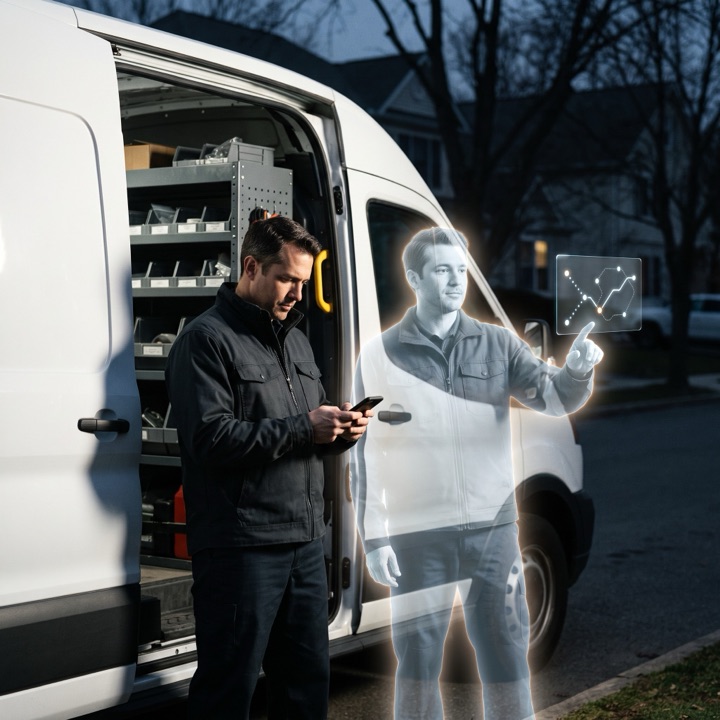

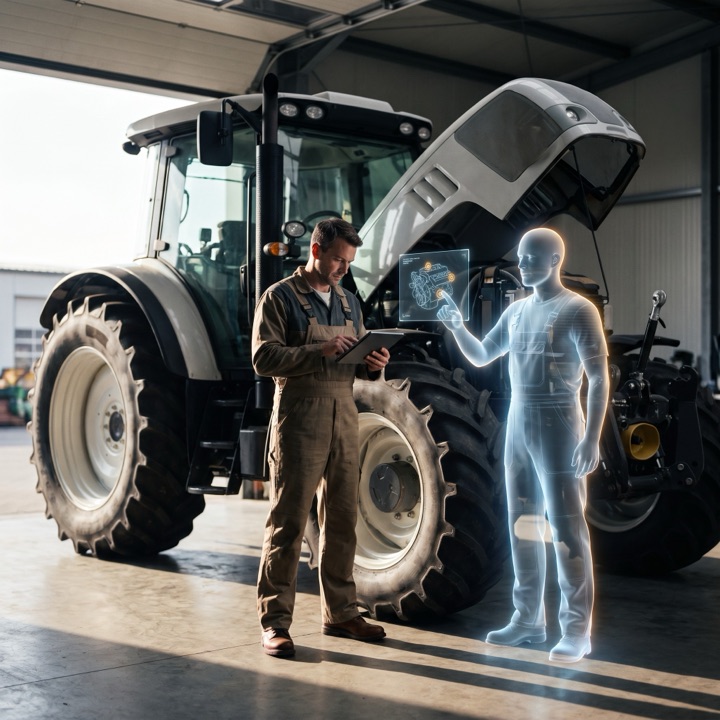
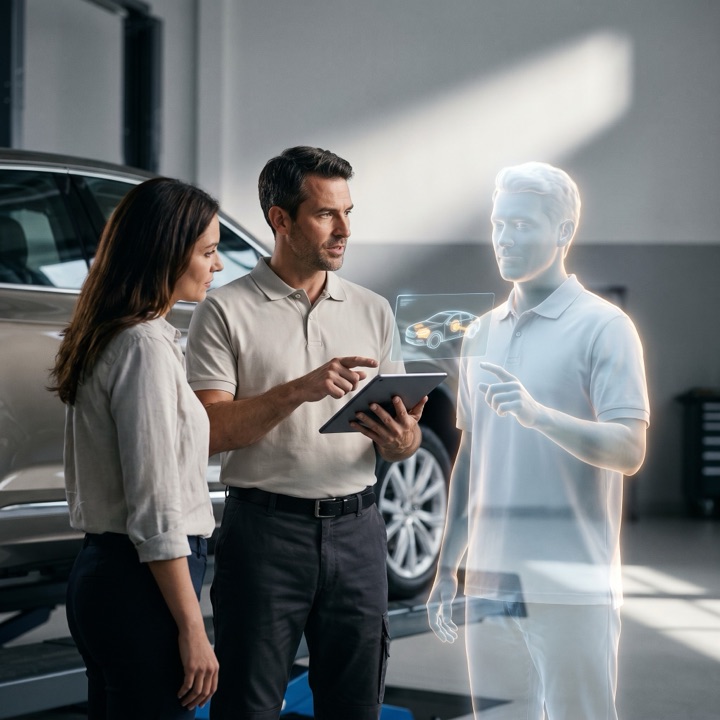
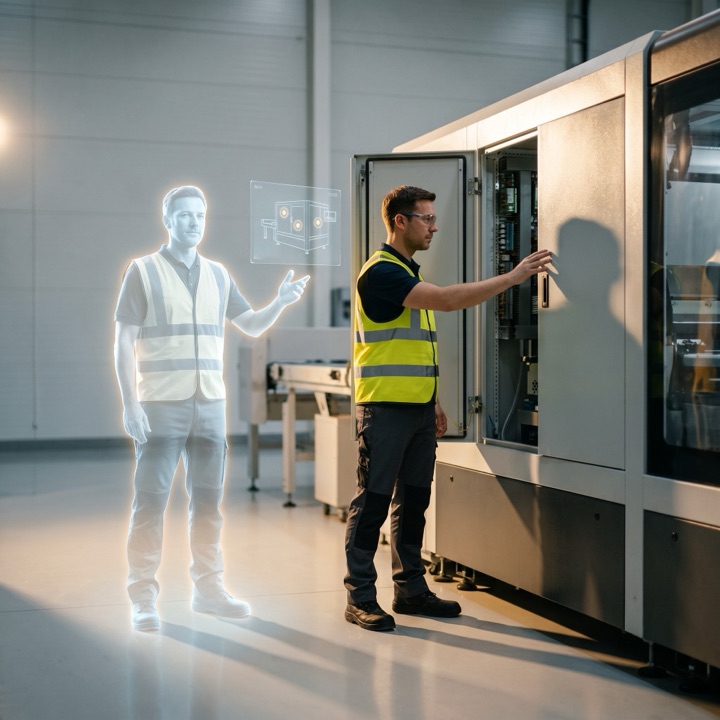
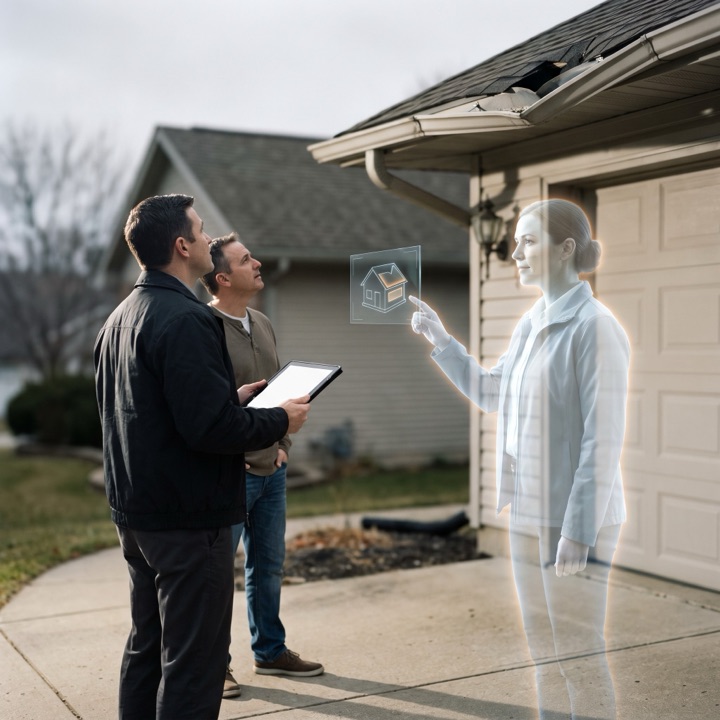

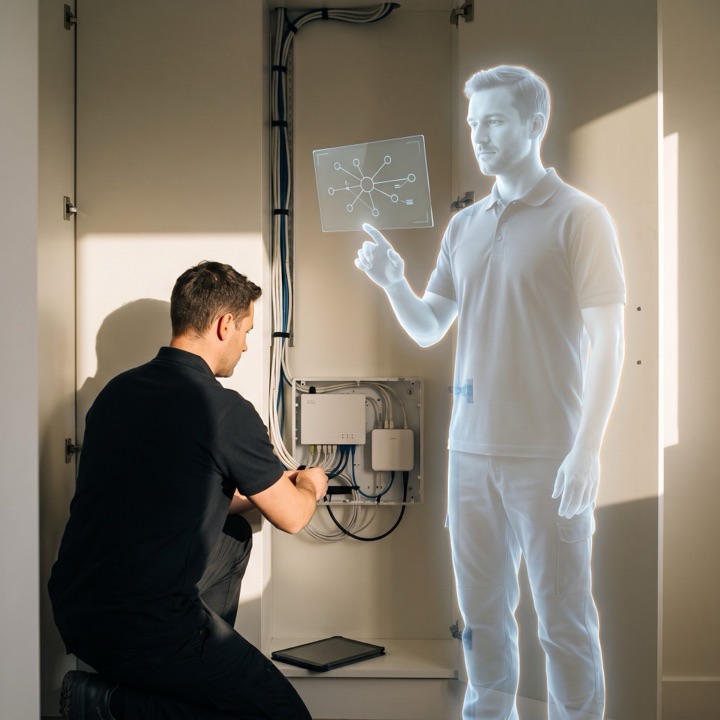
Illustrations of where the method applies.
For manufacturers and networks · the view from head office
Know what your whole network is asking. This week.
A manufacturer with thousands of dealers and hundreds of technical products has never been able to hear its own network. Every question a dealer or technician asks their coworker becomes a signal. Head office sees the pattern, never the person.
What they ask most
The real questions from the counter and the field, by country, language and role. Your training calendar, written by the people it is for.
What your documents can't answer
Every question the coworker had to decline is a gap in a manual, a datasheet or a course. You get the list, ranked, by product family.
What to translate first
One knowledge base serves every language. You see how often a dealer was answered from a document in another language, so translation money goes where it is used.
Never who asked
Totals and patterns only. Head office sees no names against questions, no leaderboard and no individual's questions. A network that trusts the coworker keeps asking it, and that is the whole value.
Asked most this week
- Which model for a home this size?71×
- How do I explain the efficiency rating to a homeowner?48×
- Can it replace an older unit without new ducting?36×
- What clearance does it need on install?27×
Not in your documents yet
- Error code after a retrofit: what to check firstInstallation · 24 asks · no procedure foundgap
- Approved substitute for a discontinued partParts · 15 asks · not publishedgap
- Pairing with an older thermostatControls · 9 asks · not coveredgap
Language mix
17% of answers came from a document in another language. Those documents are the ones to translate first.
An illustration with invented figures. A live view is built from your own network's questions.
The part most people miss at first
The network starts teaching itself.
Every dealer in your network is solving the same problems alone, and taking the answers home at night. A coworker changes that. The best way of doing a job, found once by one person, becomes the way everyone does it, with a person's approval at every step.
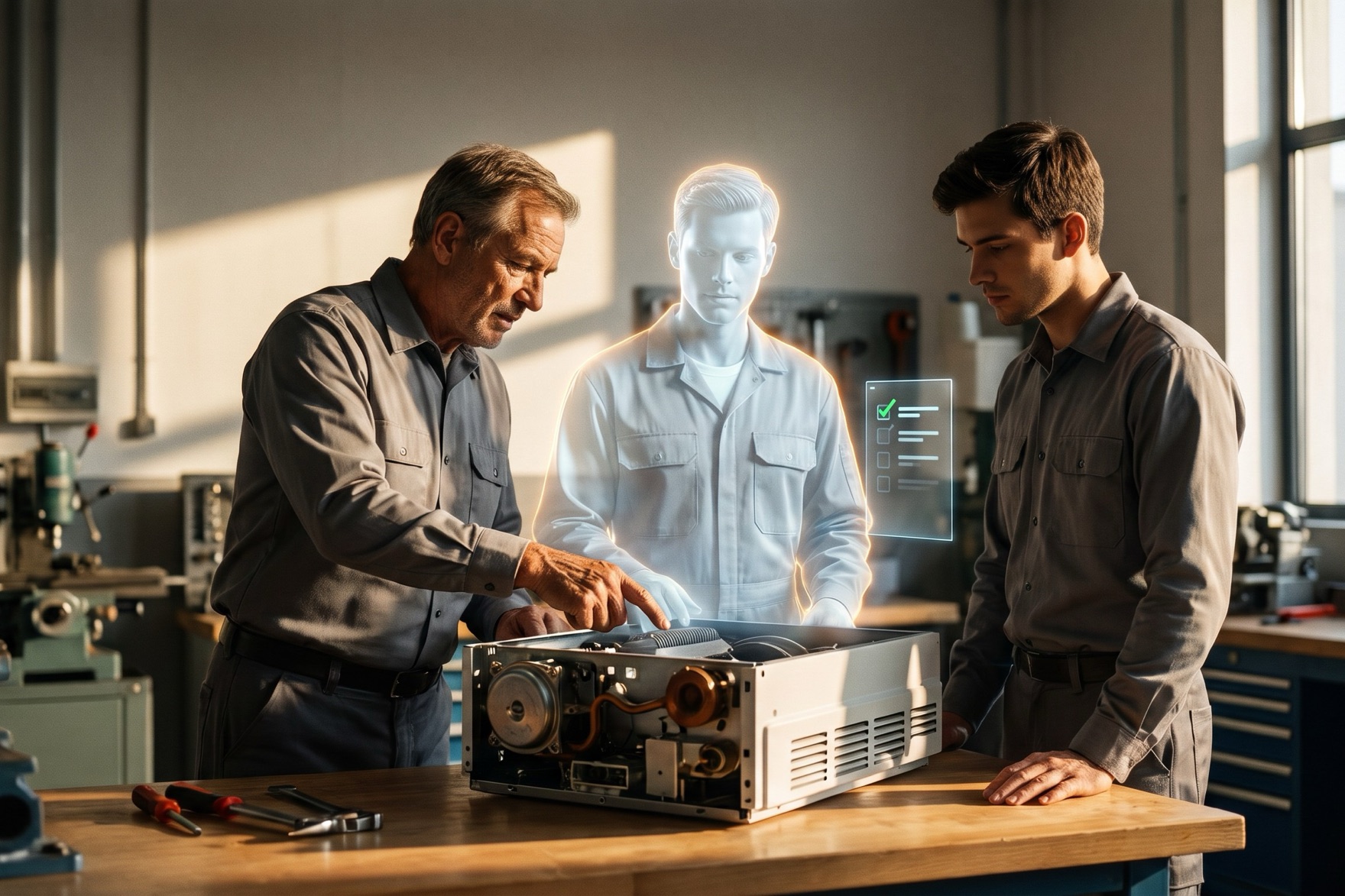
Someone finds a better way
A technician, a counter lead, a rep. They tell the coworker in their own words, by voice or text, at the moment they work it out.
A manager approves it
Nothing teaches anyone until a person with the authority has read it and signed it off. Their name stays on it.
It becomes a procedure
The coworker writes it up as a standard operating procedure, filed where the next person will be answered from it.
Everyone is answered from it
The next time anyone asks, they get the approved way, and a count of how often it has been used tells you which ideas are earning their keep.
↻ and the next person improves on it. Each turn makes the next answer better.
What the next person sees
An answer with a name behind it.
Not a forum post and not a guess. A way of doing the job that a colleague found, a manager approved, and other people have already relied on.
Check the seal before you condemn the valve
On units older than ten years, a lockout on a warm day is usually the seal, not the valve. Replace the seal, clear the code and run a full cycle before ordering parts.
An illustration. The approver is always named. The person who found it is named when they choose to be.
Inside one dealership, it is the crew's own playbook. Across the network, each dealer chooses what to share. From head office, the manufacturer's procedures sit beside the field's. Read the paper →
The platform · how it works
It doesn't just answer. It captures, it teaches, and it sees.
Behind every JARVIS Model Coworker are three capabilities working as one loop. Most vendors ship one of them. The whole advantage is in assembling all three.
Capture
Harvest what your experts know before it walks out the door. JARVIS interviews your veterans, turns hard-won, undocumented know-how into structured, searchable intelligence, and captures every new fix the field discovers.
The knowledge that was trapped in one head, now owned by the business.Learn
Every worker performs like your best, from day one. Expert guidance delivered in plain conversation, by voice or text, adaptive to the role, the task, and the customer standing in front of them.
A twenty-year veteran's judgment, in every worker's ear.See
Eyes on the work. Through smart glasses and the camera, JARVIS reads the equipment, the gauge, the install, and delivers the answer hands-free, at the moment a worker is standing in front of the problem.
Not just a voice that knows. A coworker that can look."We will never build a system that makes the human less necessary. We will only build ones that make the human more capable." That is not a tagline. It is an architectural constraint, enforced in every line we ship.
Available to every coworker
Built for a network, not for a demo.
The parts that decide whether a coworker is still in use six months later. All of them are available to every coworker.
The languages your network works in
One knowledge base, many languages. A dealer asks in their own language and is answered in it, even when the only source is a datasheet written in another.
Built on a deep discovery of your business
We start from what you already publish, then sit with your experts for what was never written down: the judgment, the culture, the reasons customers choose you. How we build yours →
Hands-free, same answers
Ask out loud with both hands on the job. The spoken answer comes from the same documents as the typed one, and says which.
The diagram beside the answer
When the manual has a drawing, the technician sees it next to the steps, instead of reading a description of a picture.
How we get it in
You don't brute-force intelligence into a company. You find the edge.
Every established organization has an immune system: the approval chains, the legacy software, the way-we've-always-done-it. Try to install something AI-native in the core and the antibodies attack it on contact. Trying to rebuild the engine while the plane cruises at 30,000 feet is how most corporate AI dies, and the data agrees: 95 percent of enterprise AI pilots return nothing.
So we don't start in the core. We start at the edge: one real workflow, owner-sponsored, run as a clean AI-native pilot beside the existing operation, in partnership with the people who do the work and the supervisors who answer for it. Prove the value where it's safe to prove. Earn the right to scale. We call it the Edge, and it's how augmented human intelligence actually lands.
See how the Edge works →On shift today
Not a demo. At work, where the work is physical.
Real teams, real work, real accountability. The specifics stay with our clients until they choose to tell their own story.
Deployed in the field with sales, service and consumer-facing teams in several industries
"A mentor in your ear."
A working field technician, unprompted, with nobody from head office in the room
The next step
Find the one workflow where AHI proves itself.
Ten questions. Ten minutes. You leave with a scored readiness picture, a first-workflow candidate, and the two numbers your business case needs. We find out whether we should be talking.
Scored on the spot · your answers stay yours until you choose to send them